
Virtual reality in therapy, learning and everyday life
Virtual Reality.Real-World Possibilities.
VR-based therapeutic experiences to practise, learn and take part, alongside the support you already have.
Services are being reactivated. How it works
- Plain-English research, limits included
- Sources on every page
- Australian context
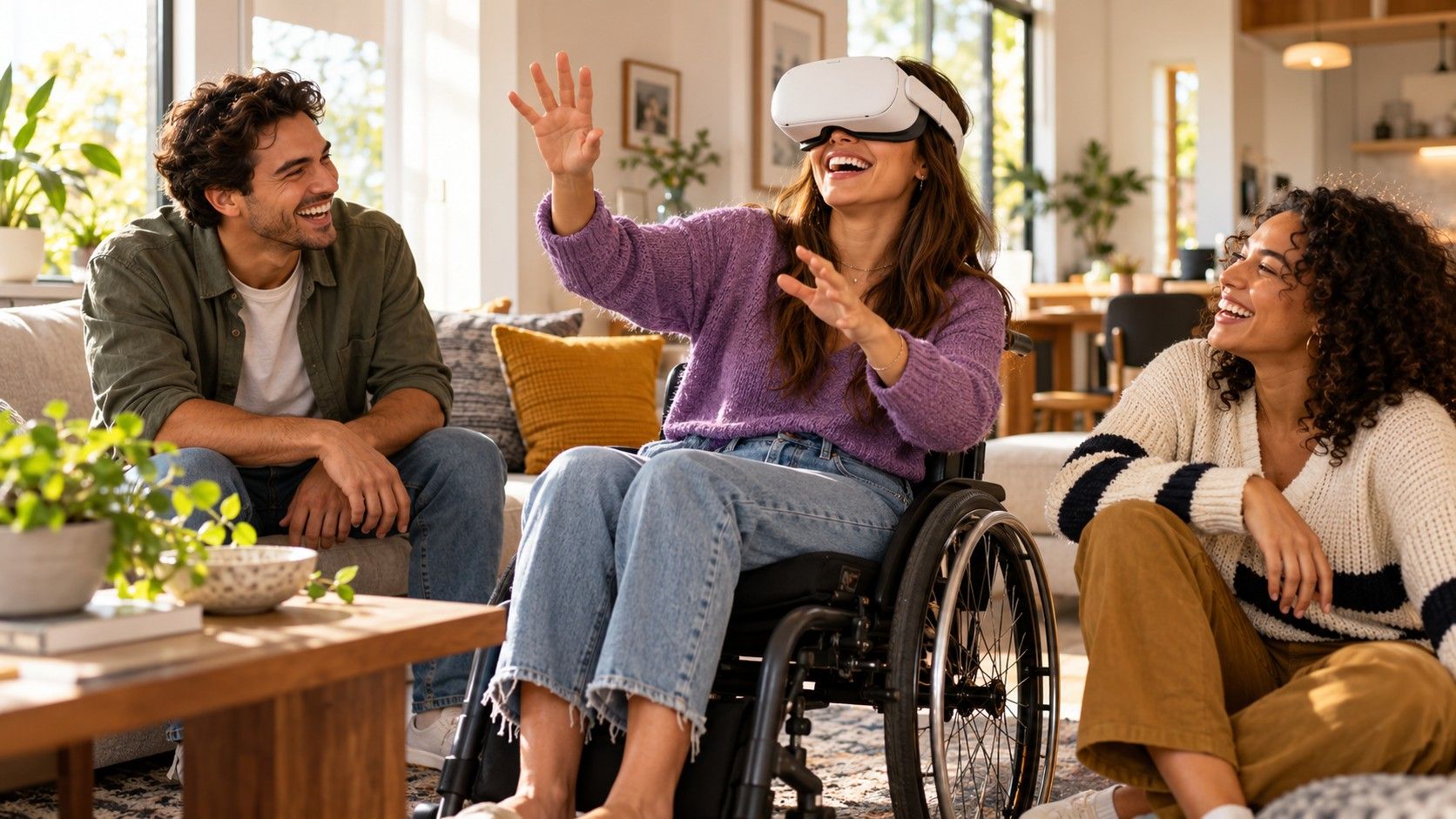

Therapeutic uses
Where VR is being used, and what we know.
VR is a tool. Practitioners add it to established approaches to help people practise skills, build confidence and take part.
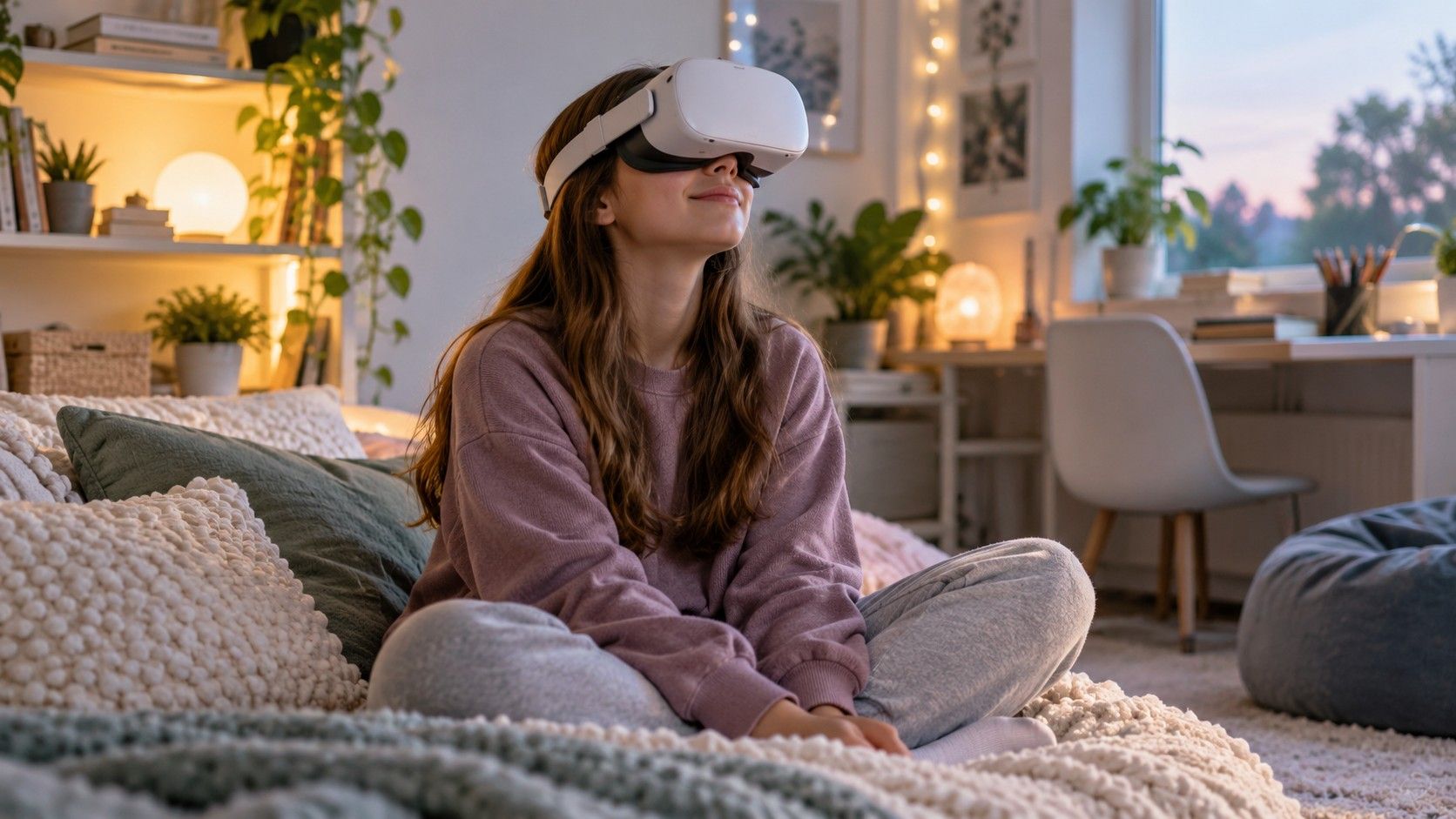 Autism & ADHDRehearse everyday and social situations.
 Psychosocial & mental healthApproach hard situations at your own pace.
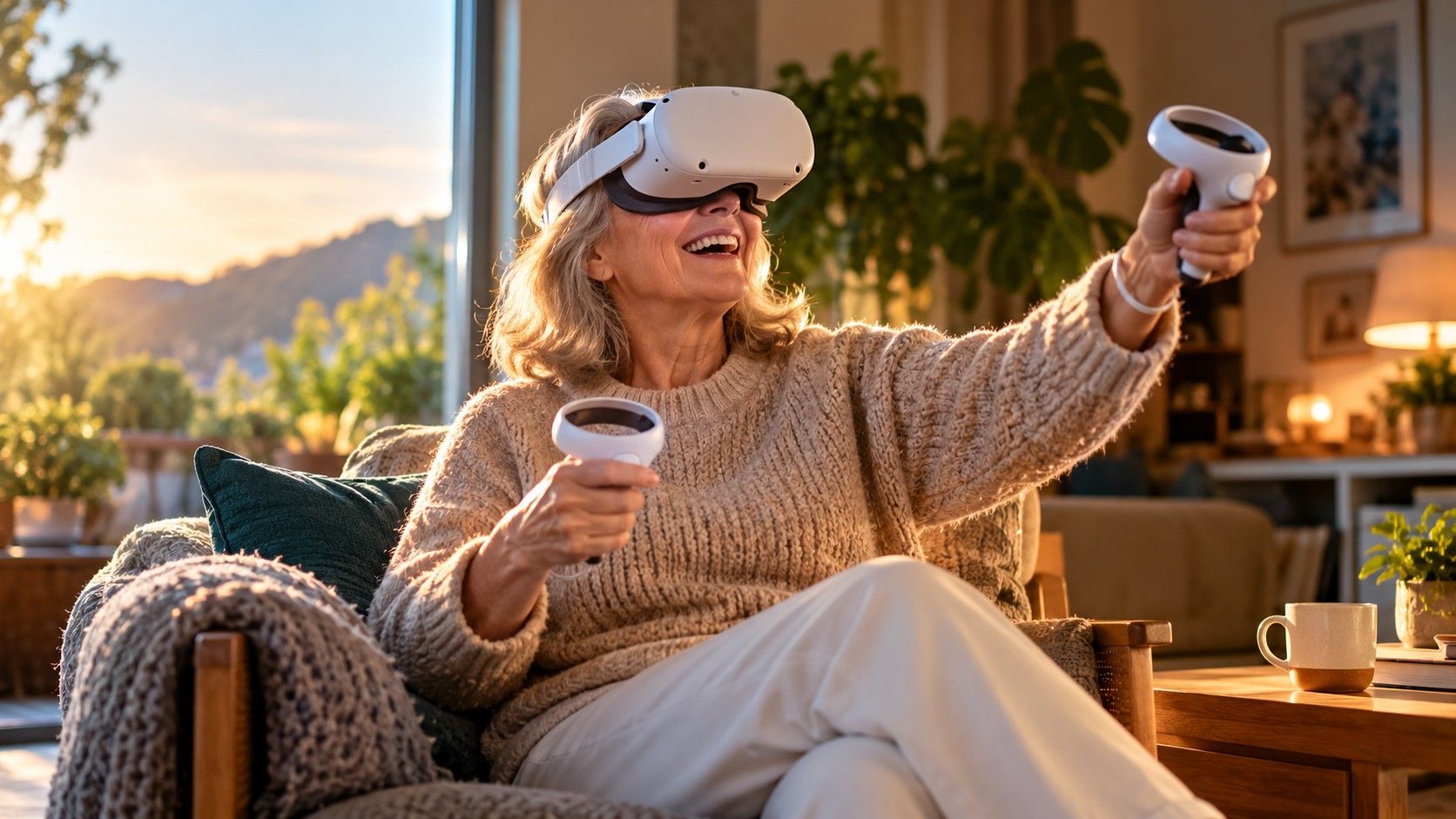 RehabilitationMore practice, with more variety.
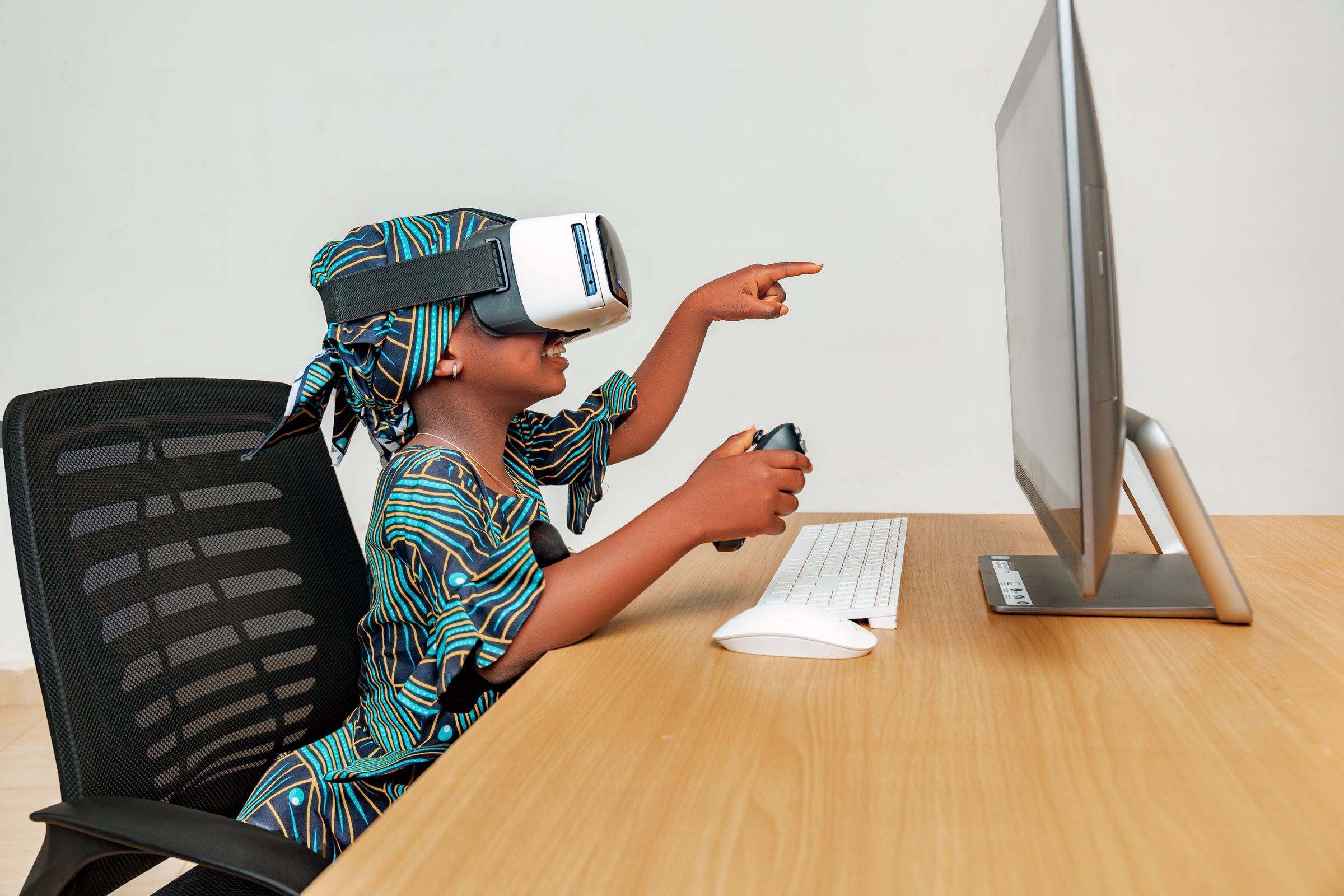 Learning & educationLessons and excursions you step into.
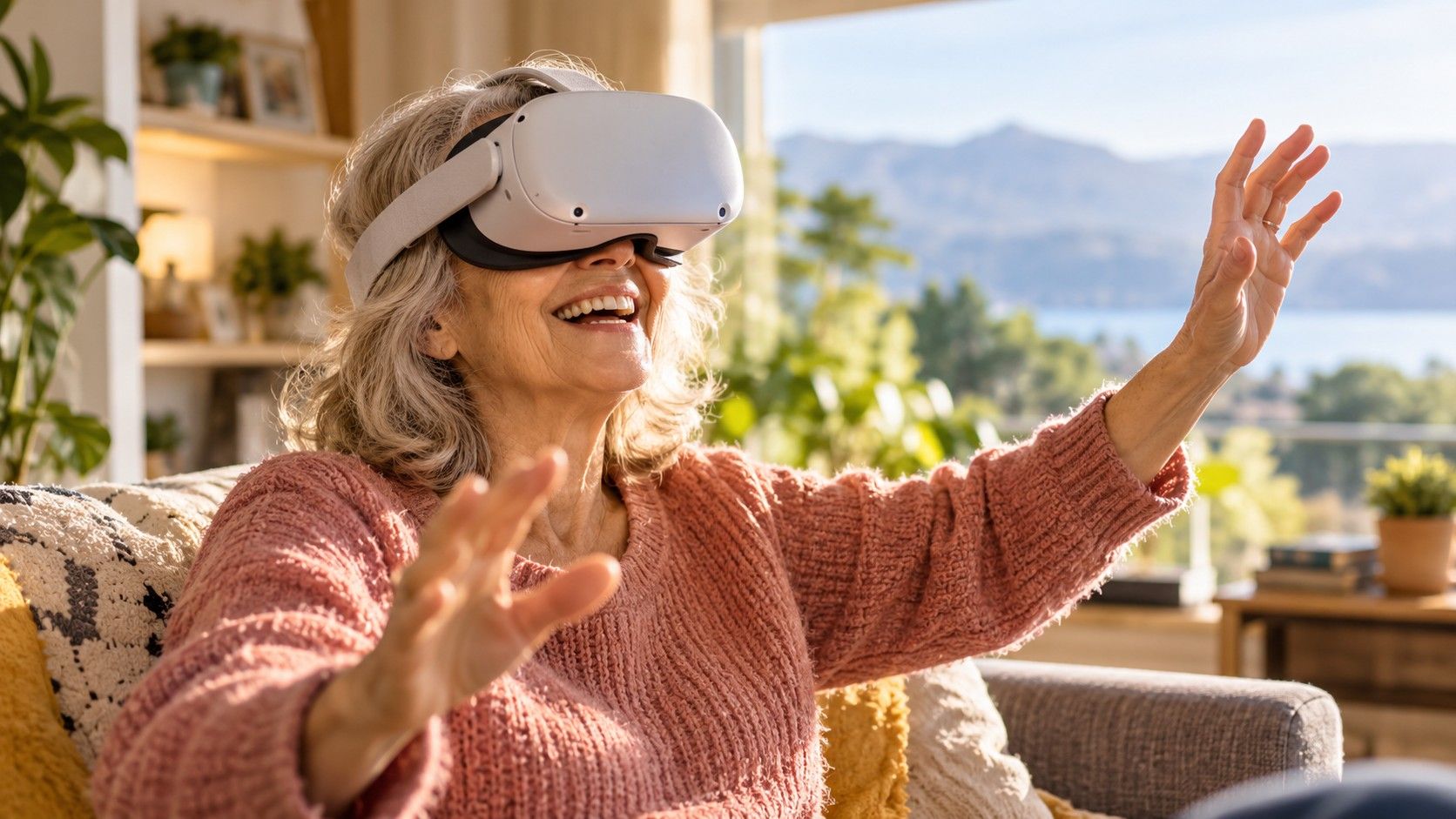 Healthy ageingGentle, seated experiences in later life.
- An addition, not a replacement. Alongside established approaches.
- Known technology. Mainstream consumer headsets, not experimental equipment.
- Evidence, honestly. What the research covers, and its limits.
How it works
Three steps. No obligation.
Explore
See how VR is used and what the research says.
Register interest or refer
Tell us who it’s for and where you are.
Hear from us
We’ll contact you as services and availability are confirmed. Registering isn’t a booking.
What makes VR different
Same room.A different world.
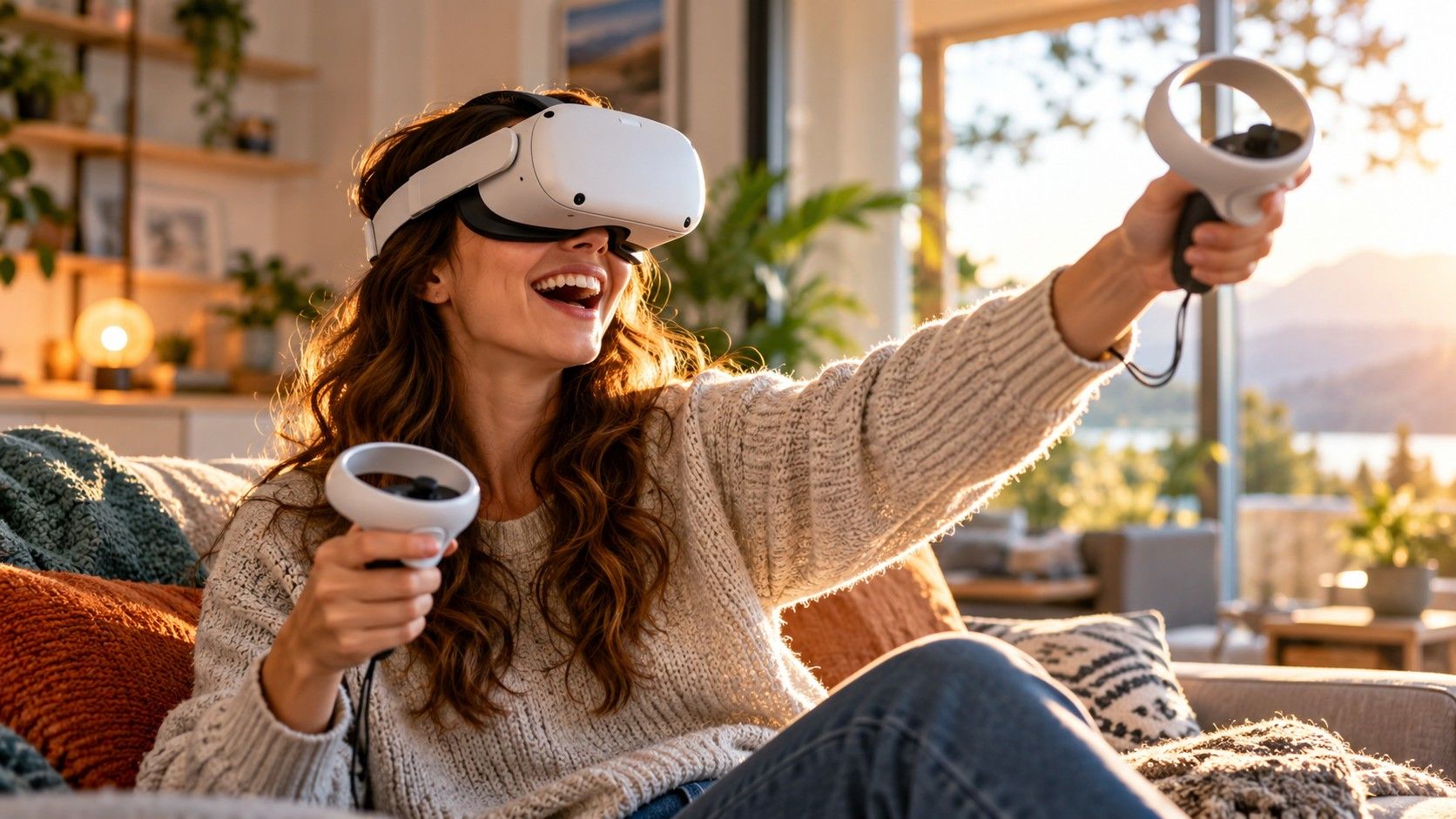
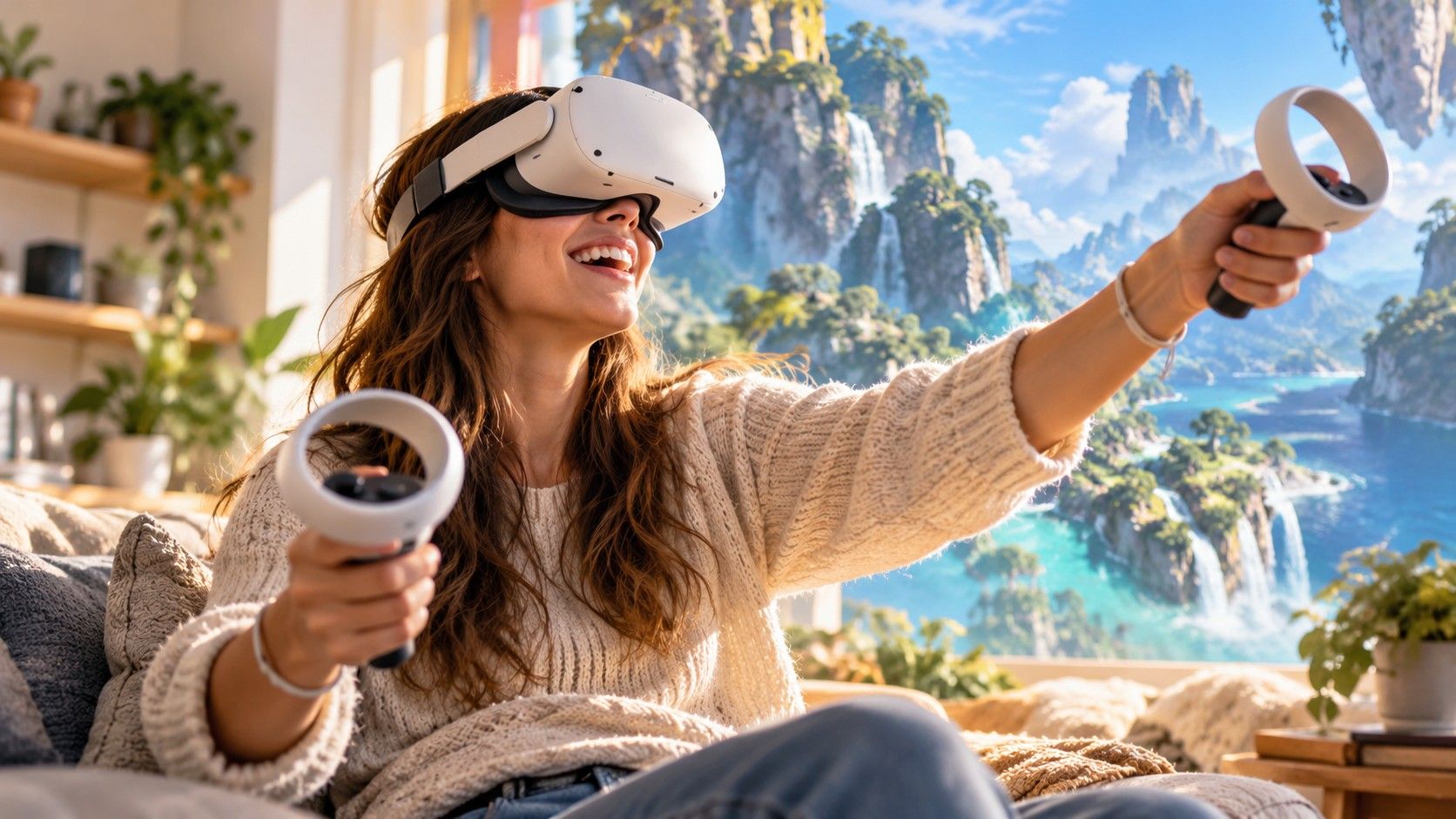
- An ordinary afternoon at home.A sofa, a window, the room you know.
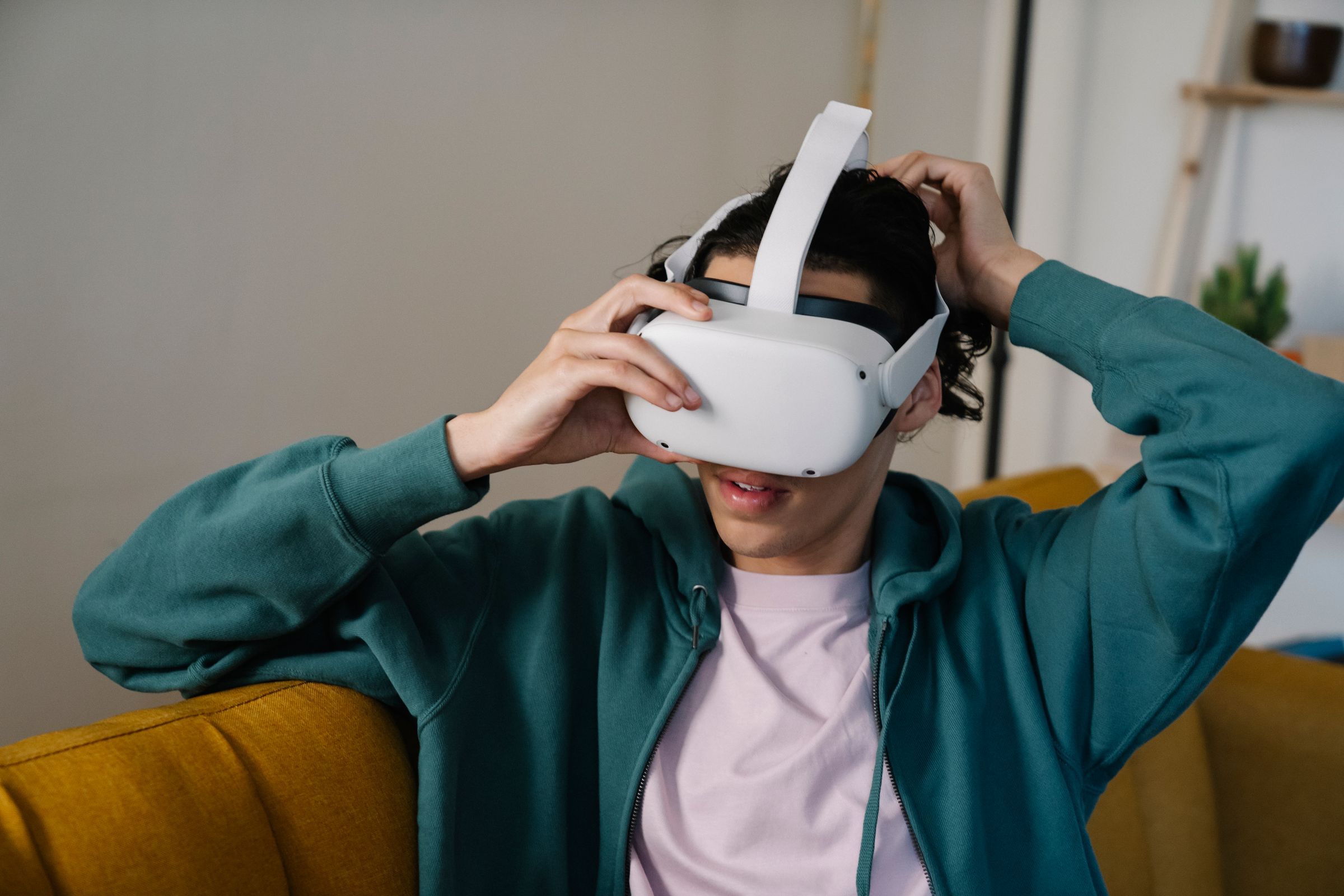
- Put on a headset, and the room becomes somewhere else.VR fills your field of view, so a place or a situation feels present rather than watched on a screen.
- Somewhere to practise, explore and take part.Practitioners use that sense of presence to set up situations that can be paused, repeated and adjusted.
Why VR
A different way to engage.
- Interactive
Move, reach and respond, rather than watch.
- Repeatable
Pause, replay, make it easier or harder.
- Seated, at home
Several headsets offer a seated mode. How it works
- Across ages
Within each maker’s age guidance. For schools
Go deeper
Research, funding and the right equipment.
Next step
Services are being reactivated.
Enquiries open soon
We’re finishing the setup that lets us receive and reply to enquiries. Until then, here’s how VRTA will work.